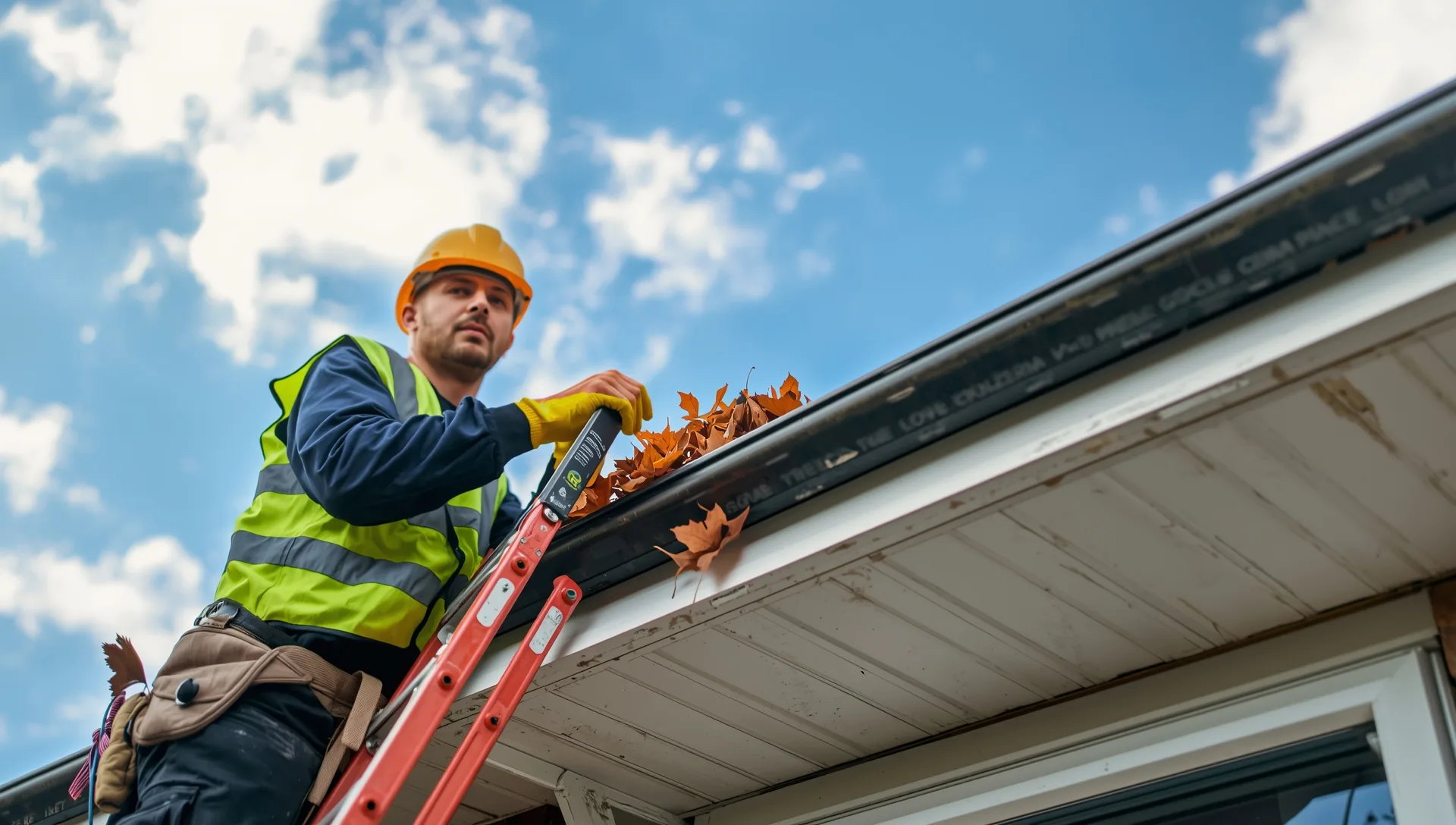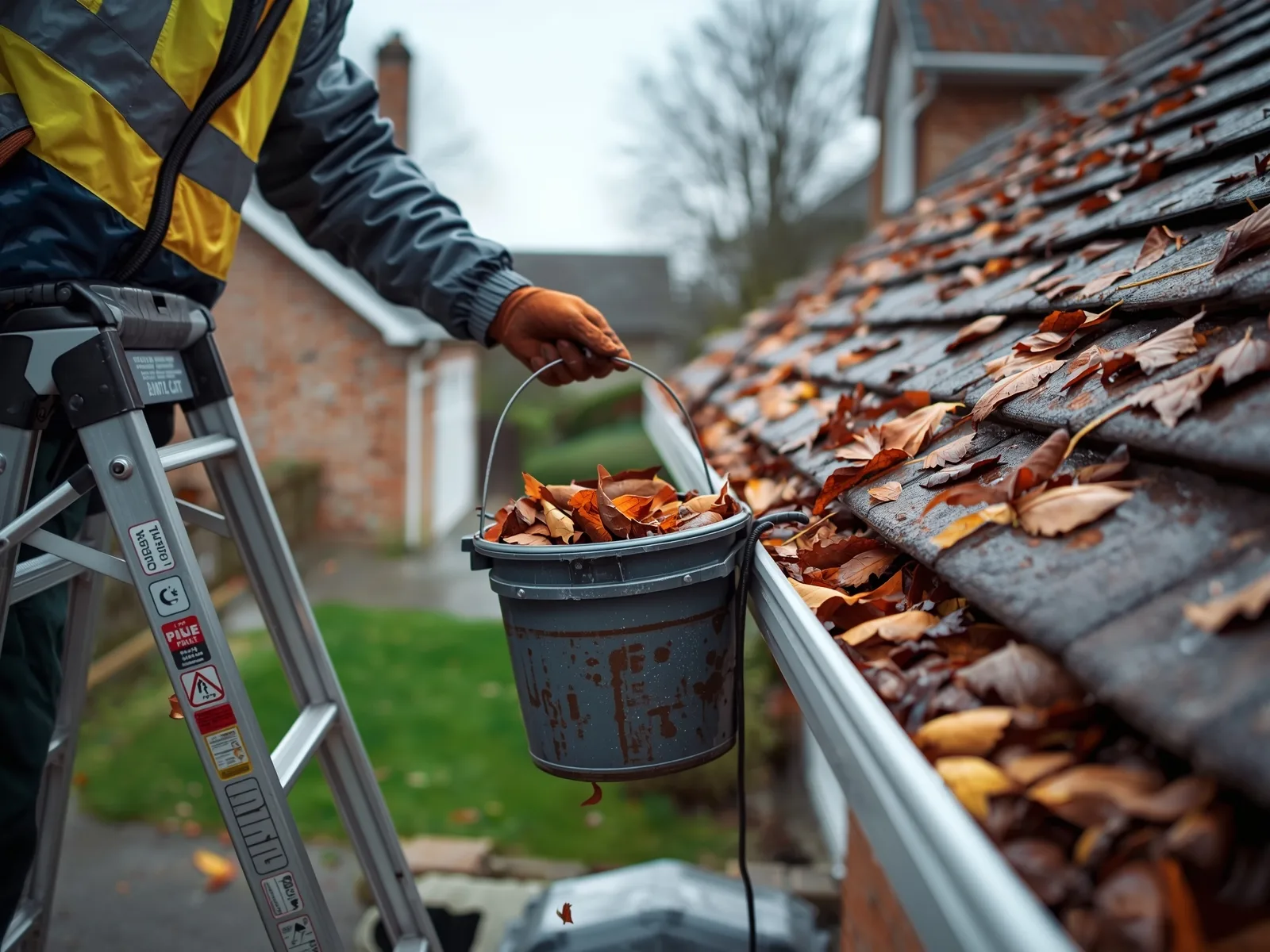
On a single-storey house with walkable ground, a careful owner with a sturdy ladder, gloves, and a spotter can absolutely do this job, and we'll cheerfully say so. The technique is not the barrier. The barrier is that ladder falls are one of the most common serious home-maintenance injuries, and second-storey gutters put you at exactly the height where falls stop being stories and start being surgeries.
The honest decision rule: if any part of the job requires the ladder's top three rungs, leaning past your belt buckle, or working above concrete, the professional's fee is cheaper than your deductible. Two storeys, steep grades, or gutters over conservatories — that's our ladder's problem, not yours.
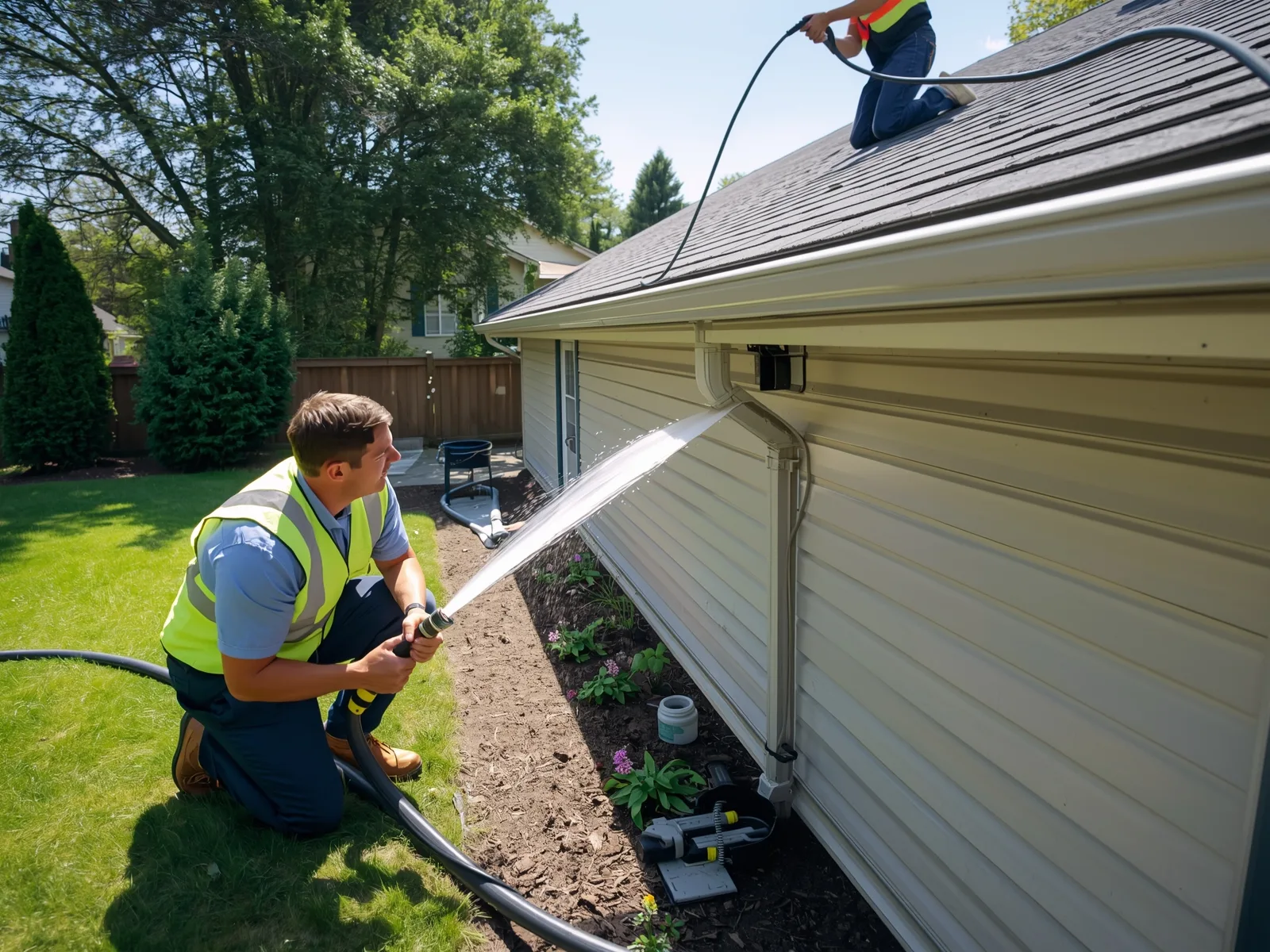
What we bring beyond nerve: standoff stabilizers that don't crush the gutter we're cleaning, flow-testing gear for the downspouts, and the routine of someone who did eight houses this week. Speed isn't the point; the photos of a verified-flowing system are.
If you do go the DIY route, three rules cover most of the risk: never work alone (the spotter's job is the ladder base, not the conversation), move the ladder instead of leaning past your belt buckle — the reach that feels like saving two minutes is the one in the injury statistics — and stay off the roof entirely. Gutters are cleaned from the ladder, not from above; wet leaves on shingles are how confident people meet their deductibles.